Orbitel's "One Suitcase" Selected for 2026 National Art Exhibition
2026-08-12
Inspired by O’s Bubble character BOBAMAN, the installation explores movement, belonging and ways art create connection across cultures.
Orbitel International Corp. announced that One Suitcase, an installation created by its creative director, Ming-Ji Hsieh, has been selected for the 2026 National Art Exhibition at the National Taiwan Museum of Fine Arts in Taichung.
Organized by the museum under the guidance of Taiwan’s Ministry of Culture, the exhibition brings together 114 selected and award-winning works from more than 1,000 submissions. Now in its 16th edition, the exhibition spans 11 categories, including ink painting, oil painting, sculpture, photography, new media and mixed media.
Orbitel International Corp. announced that One Suitcase, an installation created by its creative director, Ming-Ji Hsieh, has been selected for the 2026 National Art Exhibition at the National Taiwan Museum of Fine Arts in Taichung.
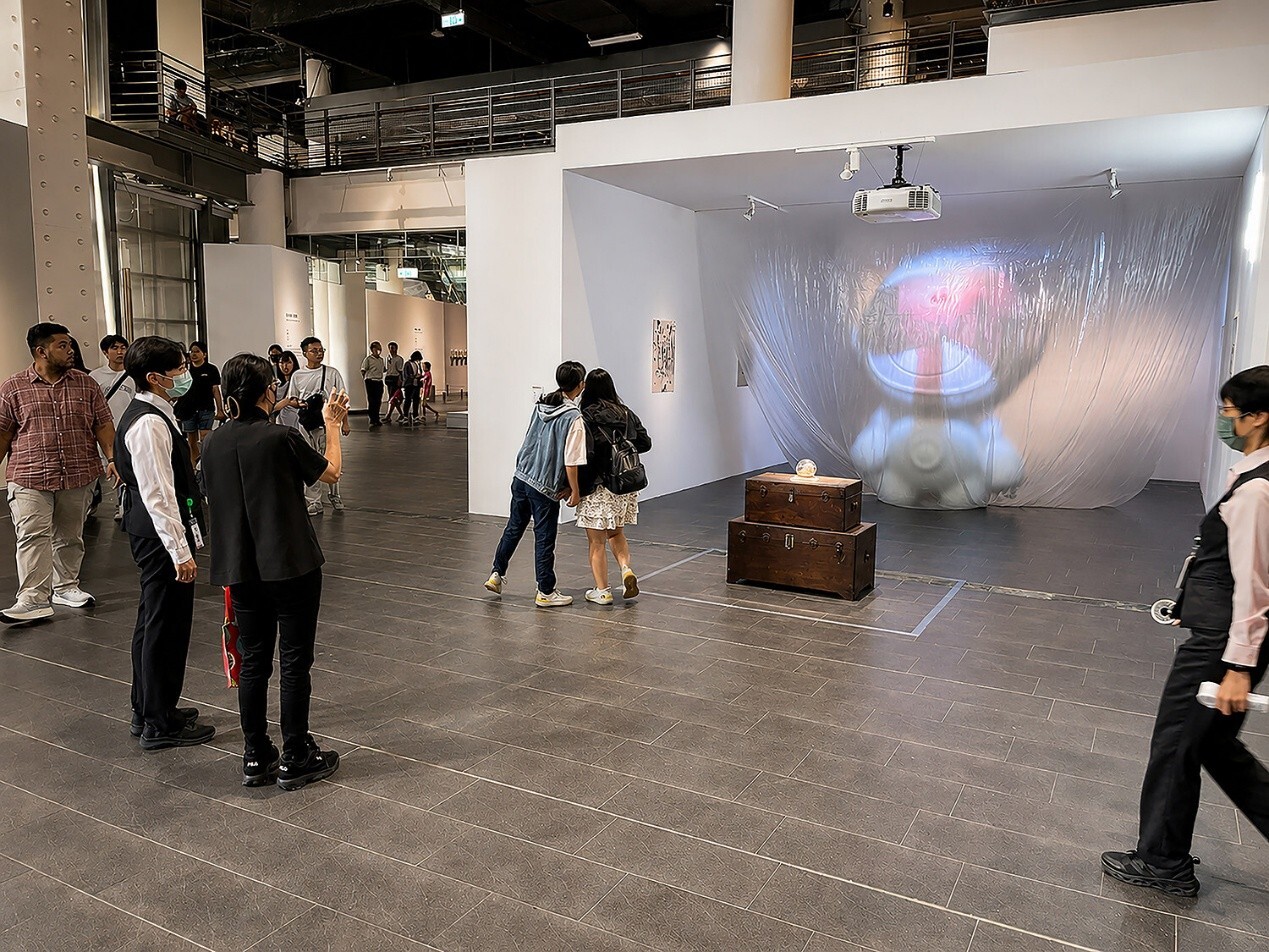
The exhibition is held at the National Taiwan Museum of Fine Arts
(No. 2, Section 1, Wuquan West Road, West District, Taichung City, Taiwan).
Admission is free and open to the public.
(Image courtesy of Ming-Ji Hsieh, Creative Director of Orbitel International Corp.)
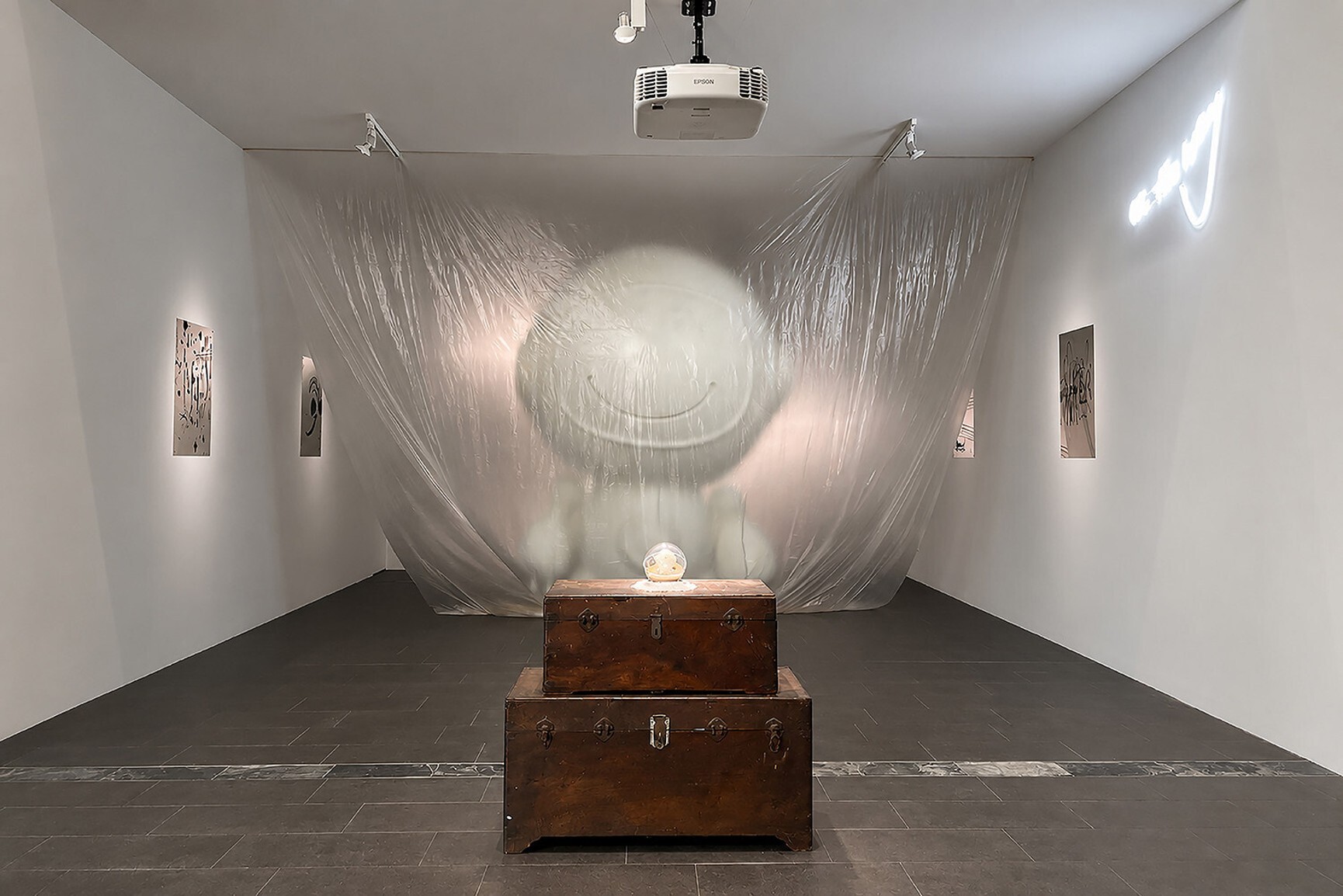
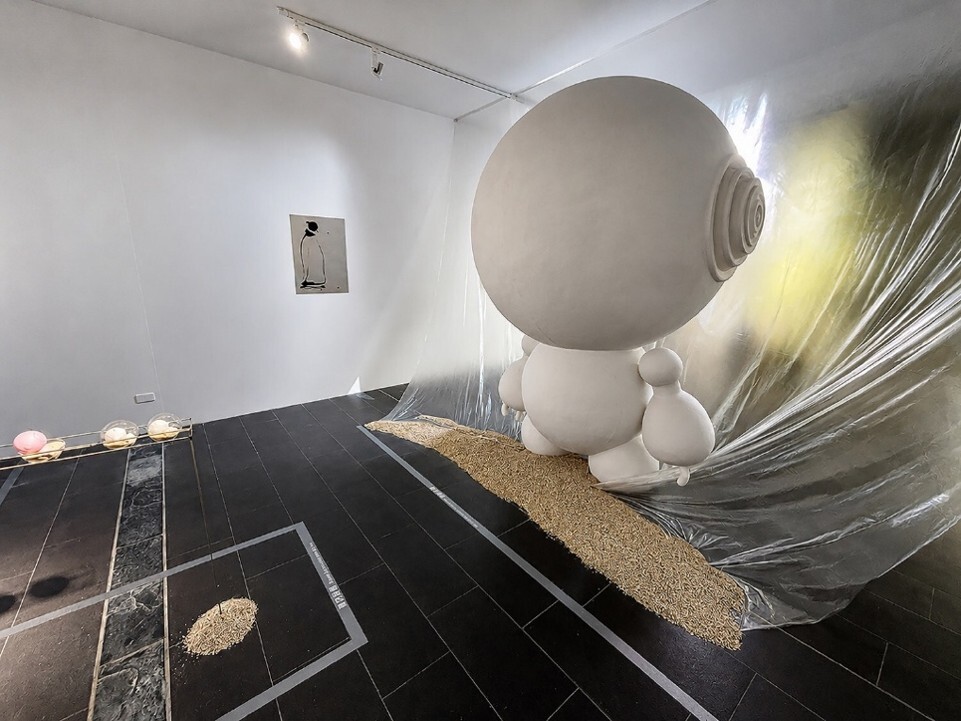
Among those works, One Suitcase begins with something familiar: BOBAMAN, the signature character of O’s Bubble. But inside the gallery, the character enters a different world. Two weathered suitcases stand before a translucent surface. Light moves across the installation, gradually revealing BOBAMAN’s rounded form and familiar smile.
The setting is quiet. The story it carries is not.
Rooted in the experience of leaving, traveling and beginning again, One Suitcase transforms a brand character into a reflection on movement and belonging. It asks what people take with them when they leave one place for another—and what remains when language, geography and certainty fall away.
A Suitcase as a Symbol of Modern Life
At the center of the installation is a single suitcase. It is an ordinary object, defined by limits. A traveler can take only what it will hold. Every choice to pack something is also a choice to leave something else behind.
For a generation moving frequently between cities, countries, languages and cultures, the suitcase has become more than luggage. It can represent ambition and possibility, but also distance, uncertainty and the search for a place to belong.
One Suitcase reflects that shared experience.
The work presents travel not simply as freedom, but as an act of belief: the decision to move toward a future that has not yet taken shape.
Rooted in Taiwan’s island culture, the installation expands toward a wider global perspective. It suggests that beginning a journey is not always about having more.
Sometimes, it is about carrying less. Less in possessions. More in purpose.
That tension - between lightness and conviction - forms the emotional center of the work.
“I began with the suitcase because it is an ordinary object carrying an extraordinary amount of emotion,” Ming-Ji Hsieh said. “It holds what we choose to take with us, while also suggesting everything we leave behind. By placing BOBAMAN within that setting, I wanted the character to move beyond its role as a brand symbol and become part of a more universal story - about departure, uncertainty and the belief that allows us to continue.”
From Brand Character to Cultural Expression
BOBAMAN was created as the signature character of O’s Bubble. With its rounded form, simple features and gentle smile, the character was designed to express warmth, optimism and approachability.
Within One Suitcase, however, BOBAMAN assumes a different role. Enlarged, partially concealed and surrounded by the visual language of travel, the character becomes a figure in transition.
A traveler. An observer. A presence standing somewhere between departure and arrival.
The installation does not erase BOBAMAN’s relationship with O’s Bubble. Instead, it uses that identity as a point of departure, allowing the character to carry meanings beyond its original commercial setting.
Visitors do not need to know BOBAMAN’s history before encountering the work. They can begin with what they see: the suitcases, the shifting light, the partially revealed figure and the smile.
From there, the meaning becomes personal. For one visitor, the suitcase may recall migration. For another, the excitement of starting over. For someone else, it may evoke the loneliness of leaving home or the hope of arriving somewhere new.
The artwork does not insist on one interpretation. It creates space for many.
(Image courtesy of Ming-Ji Hsieh, Creative Director of Orbitel International Corp.)
Where Art Creates Connection
The O’s Bubble philosophy, “YOU × ME,” represents more than interaction between individuals. It reflects the possibility of understanding between people whose cultures, languages and experiences may be different.
In One Suitcase, that philosophy is expressed through one of the simplest forms of human communication: a smile.
A smile can welcome. It can reassure. It can signal trust before a conversation begins.
Within the installation, BOBAMAN’s smile is no longer only part of a character design. It becomes an emotional gesture - one that reaches across the distance between the artwork and the viewer.
“Food is one of humanity’s most intimate forms of expression - a language of memory, place and belonging,” said Fanny Chen, CEO of Orbitel International Corp. “With One Suitcase, a character born in the world of O’s Bubble becomes a vessel for those same ideas: how we move through the world, what we carry with us and how we find connection across cultures. Just as a taste can return us to a place, a person or a moment, art can reach beyond its origins and become something universally human.”
That idea is particularly meaningful in a work centered on movement. When people enter unfamiliar places, words may not always be available. Meaning is often communicated through gestures, expressions and small moments of recognition.
A smile does not remove cultural differences. But it can create an opening.
A beginning. A moment in which connection becomes possible.
Through BOBAMAN, a visual identity created in Taiwan begins to operate as an emotional language that can travel beyond it.
When Design Enters the Gallery
The boundaries between design, branding and contemporary art are becoming increasingly fluid.
A visual identity may begin on packaging, in advertising or within a retail environment. But when it carries a story, an emotion or a cultural point of view, it can move into other spaces. It can enter a museum. It can become part of a public conversation. It can invite reflection rather than deliver a fixed message.
One Suitcase exists within that evolving space.
(Image courtesy of Ming-Ji Hsieh, Creative Director of Orbitel International Corp.)
The installation does not disguise its origins in brand design. Instead, it examines how a character associated with a company can take on new meaning when placed in an artistic context.
Within a commercial setting, a character is usually expected to communicate clearly. It builds familiarity, creates recognition and represents a defined identity.
Within a gallery, the same character is allowed to become uncertain.
BOBAMAN may appear hopeful. Vulnerable. Alone. Or quietly determined.
The work no longer tells the audience exactly what to feel. It creates the conditions for feeling.
In doing so, One Suitcase demonstrates how brand language can move beyond marketing and become part of a broader cultural narrative - one shaped by identity, movement and human connection.
From Taiwan to a Wider Creative Conversation
The selection of One Suitcase marks a milestone for Hsieh, Orbitel International Corp. and O’s Bubble.
It also reflects a broader change across the creative industries. Brands are increasingly becoming more than commercial identities. They are developing into platforms through which ideas, values and cultural perspectives can be expressed.
For Orbitel and O’s Bubble, the installation represents a movement from market communication toward cultural storytelling.
Its significance, however, extends beyond the company. The work offers an example of how creativity originating in Taiwan can enter an international conversation without losing its connection to the place where it began.
Rather than relying on a collection of familiar cultural symbols, One Suitcase begins with an experience shaped by island life: an awareness of distance, departure and the importance of remaining connected. From that local starting point, the work reaches toward something universal.
The desire to move forward. The uncertainty of beginning again. And the hope that somewhere beyond departure, belonging remains possible.
Local in origin. Global in emotion.
Because We Continue to Believe
The installation also carries the O’s Bubble message, “Because we believe in ourselves.”
Within the context of the artwork, the phrase becomes more than a statement of brand confidence. It becomes part of the journey.
Belief is what allows a person to leave the familiar and move toward a future that remains uncertain. It does not guarantee that the destination will be easy to reach.
It makes the first step possible. This is where the suitcase becomes more than an object. It becomes a measure of courage. Not the loud courage of knowing exactly what comes next. The quieter courage of continuing when we do not.
In the gallery, the suitcases remain still. The projected light continues to move. Behind the translucent surface, BOBAMAN’s smile remains visible - soft, familiar and open to interpretation. Perhaps that is what makes the installation recognizable.
Most journeys begin before the destination is clear. We leave carrying only part of the story. And somewhere between departure and arrival, we begin to understand what truly belongs with us. Not only the things we packed. But the belief that allows us to continue.
Admission is Free. Visitors from Taiwan and abroad are invited to experience the breadth of contemporary Taiwanese art and encounter One Suitcase as a meditation on movement, belonging and connection. By bringing branding, art and culture into the same space, the work offers a new way of considering what we carry with us, how we find common ground and how creativity can speak across borders.
Exhibition Information
Exhibition: 2026 National Art Exhibition
Dates: July 18 through Oct. 11, 2026
Venue: National Taiwan Museum of Fine Arts
Address: No. 2, Section 1, Wuquan West Road, West District, Taichung City, Taiwan
Opening hours: Tuesday through Friday, 9 a.m. to 5 p.m.; Saturday and Sunday, 9 a.m. to 6 p.m. Closed Mondays.